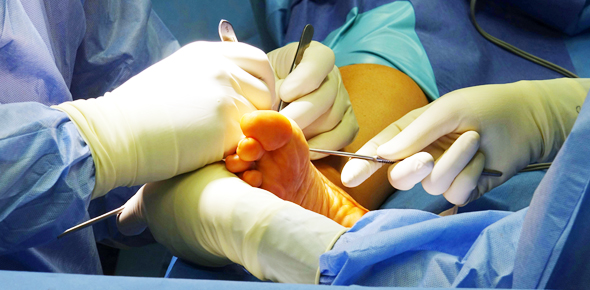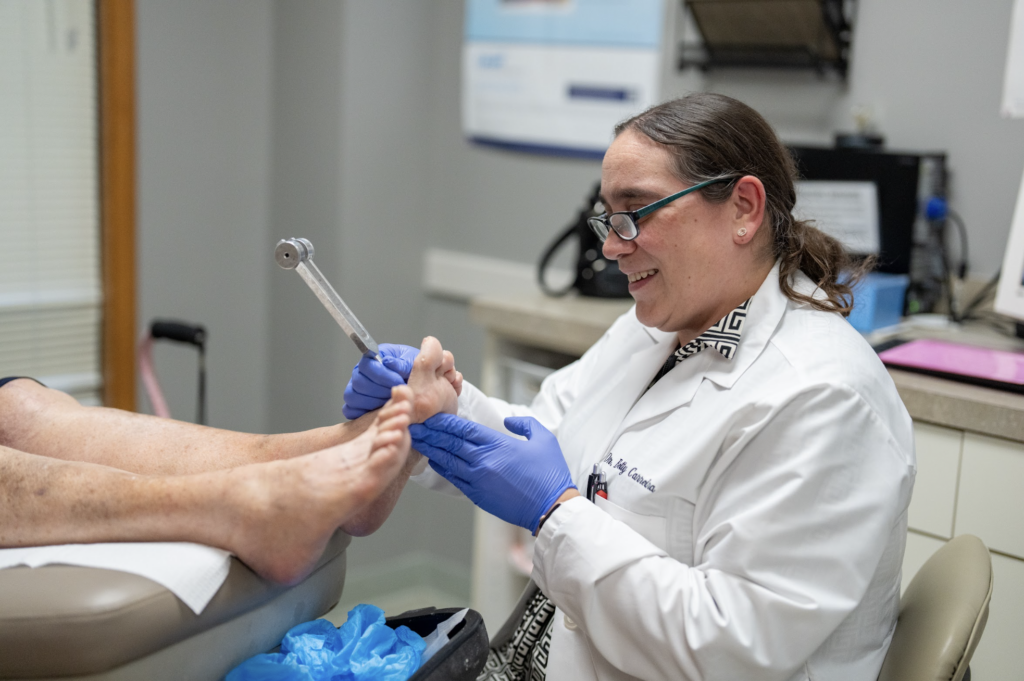
Hammer toe deformities can cause painful pressure points, difficulty wearing shoes, and progressive joint stiffness that affects daily mobility. Many patients at our Danbury, Southbury, and Naugatuck, CT clinics describe irritation on the top or tip of the toe, cramping, and a feeling that the toe becomes “locked” in place over time. Orthopedic and podiatric literature confirms that hammer toes rarely improve without targeted treatment, and moderate to severe cases often require structural correction to restore alignment and reduce pain. Our surgeons use evidence-based techniques to address the underlying mechanical imbalance and help patients return to comfortable, confident movement.

DPM, FACFAS, FACFO
Over 30 years of experience in podiatric surgery, medical education, and clinical leadership

DPM
More than a decade of caring for patients across Connecticut as a board-certified podiatric surgeon

DPM
Up-to-date surgical training with a conservative-first approach, guided by current research

DPM
An exercise science specialist who combines advanced surgical training with genuine empathy
What Is Hammer Toe Correction Surgery?
Hammer toe correction surgery At our Family Footcare CT clinics at Danbury, Naugatuck, and Southbury is designed to straighten and stabilize toes that have become bent due to muscle imbalance, tendon tightness, or joint deformity. According to podiatric guidelines, hammer toes develop when the soft tissues controlling the toe become unbalanced, leading to contracture of the proximal interphalangeal (PIP) joint. Surgical treatment focuses on realigning the joint, relieving pressure, and improving long-term function so patients can walk, stand, and wear normal footwear without discomfort. The specific procedure is chosen based on toe flexibility, severity, and overall foot structure.
When Hammer Toe Surgery May Be Recommended
Surgery is considered when symptoms persist despite conservative care such as padding, orthotics, splinting, and footwear modification. During your evaluation, we use digital X-ray imaging, range-of-motion testing, and gait analysis to determine the structural cause of your discomfort.
Persistent Pain That Interferes with Daily Activities
When hammer toe pain affects walking, standing, or wearing shoes, structural correction may be the most effective solution. Dr. James M. DeJesus, DPM, FACFAS, emphasizes that chronic mechanical pain results from the toe’s abnormal position, which cannot be fully corrected with conservative care.
Rigid or Fixed Toe Contracture
A toe that can no longer be manually straightened indicates joint contracture. In these cases, soft-tissue treatments alone are not enough, and surgical realignment becomes the recommended option.
Painful Corns or Calluses Caused by Toe Pressure
Hard tissue buildup on the top or tip of the toe is a sign of ongoing friction and mechanical irritation. Surgery addresses the root cause—the abnormal angle of the toe.
Toe Deformity That Continues to Progress
If the deformity worsens or begins affecting neighboring toes, early intervention can prevent additional complications.
Difficulty Wearing Shoes or Custom Orthotics
When the toe rubs against footwear or causes pressure points even in wide or supportive shoes, surgery may significantly improve comfort and footwear compatibility.
Failure of Conservative Treatment
If pads, splints, and shoe modifications no longer provide relief, structural correction may be the most predictable long-term option.
How Hammer Toe Correction Surgery Works
Our surgeons tailor each procedure to the severity of the deformity, your activity goals, and the condition of the surrounding joints and tendons. Techniques may be combined for optimal results.
Tendon Release or Transfer
For flexible hammer toes, releasing or repositioning tendons helps restore balance to the toe’s musculature. This approach is commonly used in early-stage deformities and aims to preserve natural joint motion.
PIP Joint Fusion (Arthrodesis)
Arthrodesis is one of the most reliable techniques for rigid hammer toes. The surgeon removes a small portion of bone from the joint and stabilizes it with a pin or implant. This straightens the toe and prevents recurrence.
Joint Resection (Arthroplasty)
Arthroplasty removes part of the joint surface to create space and allow improved flexibility. This technique is often used when the joint is severely contracted but motion preservation is desired.
Implants or Internal Fixation Devices
Modern implants help maintain the corrected position during healing and may eliminate the need for external wires. Dr. Austin Davidow, DPM, frequently uses low-profile implants designed to support predictable long-term results.
Correction of Associated Foot Problems
Hammer toes often occur alongside bunions, flat feet, or metatarsal overload. Addressing these issues during surgery may enhance long-term stability and comfort.
Your Plan for an Active Life
1. Schedule an Expert Evaluation Built Around You
We take the time to understand every factor contributing to your hammer toe, using imaging and clinical testing to identify muscle imbalance, joint contracture, and related deformities.
2. A Clear, Personalized Treatment Plan for You
Your surgeon will explain why a specific procedure—tendon release, joint fusion, arthroplasty, or implant-based correction—is recommended, and what outcomes you can expect.
3. A Roadmap Back to Comfortable Movement
Recovery includes protected weight-bearing, toe taping or splinting, and physical therapy to restore balance in the forefoot. You’ll receive step-by-step instructions to ensure a confident return to activity.
Why Patients Trust Family FootCare
Patients choose Family FootCare because we combine advanced training, evidence-based decision-making, and a patient-centered approach that makes each person feel understood and supported. Our doctors Dr. James M. DeJesus, DPM, FACFAS, FACFO; Dr. Betty M. Carreira, DPM; and Dr. Austin Davidow, DPM bring extensive experience in forefoot reconstruction and use modern diagnostic tools to ensure precise evaluation. We don’t rush decisions: every patient receives a thorough explanation of findings, treatment options, and realistic expectations so they can make informed, confident choices about their care.
What Happens If a Hammer Toe Goes Untreated?
Untreated bunions often progress, and research shows the deformity may worsen even in supportive footwear.
- Increasing Pain Over Time: The joint becomes more inflamed, making walking and exercise increasingly difficult.
- Worsening Toe Misalignment: The big toe may press into or over the second toe, creating additional deformities such as hammer toes.
- Joint Damage and Arthritis: Chronic joint misalignment can lead to cartilage wear and arthritis in the first MTP joint.
- Skin and Soft Tissue Problems: Corns, calluses, and pressure sores may form due to abnormal loading.
- Reduced Mobility: Stiffness and limited push-off strength can change gait mechanics, sometimes leading to knee or hip discomfort.
Related Conditions and Treatments
- Bunion surgery: Often associated with altered foot mechanics and may contribute to hammer toe formation.
- Metatarsalgia: Pain under the ball of the foot linked to toe deformity or pressure imbalance.
- Neuromas: Nerve irritation may occur due to abnormal toe position or foot mechanics.
- Custom Orthotics: Used to redistribute pressure and prevent recurrence or related forefoot pain.
- Digital X-Ray Imaging: Essential for diagnosing joint contracture and planning surgical correction.
- Sports Injury Care: Hammer toes can worsen due to repeated athletic stress and may need targeted management.
We provide a full spectrum of treatments tailored to the diverse lifestyles of Southbury residents.
Schedule Your Appointment Today
If bunion pain is limiting your life, you don’t have to keep pushing through it. Our team will help you understand the cause of your symptoms and whether surgical correction may offer long-term relief. Schedule a consultation to begin your path toward comfortable, confident movement.
Whether you need a routine diabetic foot check, orthotics for work, or treatment for an injury, Family Footcare CT is here to help. Contact us!
Call us today to book your visit:
📞 +1 203-405-6501
Frequently Asked Questions (FAQ)
According to Dr. Austin Davidow, DPM, a hammer toe is a deformity where the middle joint (PIP) of the toe bends downward, resembling a hammer. It usually affects the second, third, or fourth toes.
Yes. The bent toe often rubs against the top of the shoe, causing painful corns and irritation on the top of the foot. Dr. Betty M. Carreira can treat these corns at our CT office and discuss surgical correction.
In the early “flexible” stages, padding and taping may help. However, once the toe becomes “rigid,” surgery is required. Dr. James M. DeJesus specializes in releasing the tight tendons and realigning the bone.
The procedure may involve tendon release (tenotomy) or removing a small piece of bone (arthroplasty) to straighten the toe. Often, a small pin is used to hold the toe straight while it heals.
You can get them at our Southbury, Danbury and Naugatuck clinics. Custom orthotics help balance the tendon pull that causes hammer toes, preventing them from getting worse.
Recovery usually involves wearing a surgical shoe for 3-4 weeks. If a pin was used, Dr. Michelle DeJesus will typically remove it in the office after a few weeks with minimal discomfort.
The corn is a reaction to pressure from the hammer toe deformity rubbing against your shoe. Removing the corn without fixing the toe usually results in the corn returning.
Yes, a bunion can push the big toe into the second toe, forcing it to curl. We often correct both conditions simultaneously at our surgical centers in Connecticut.
Post-op pain is generally managed well with medication and elevation. Most patients report relief from the chronic pain of the deformity shortly after surgery.
Yes, if you have multiple hammer toes, Dr. Betty Carreira can correct them in a single surgical setting to minimize your overall downtime.